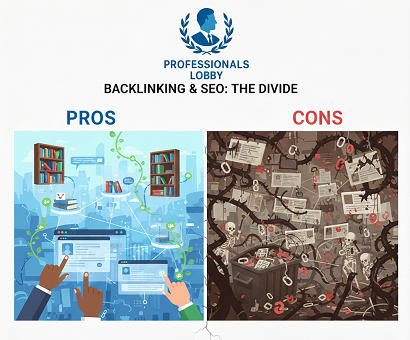
Backlinking has long been one of the most influential pillars of Search Engine Optimization (SEO). At its best, it creates a powerful ecosystem of knowledge sharing, credibility, and discovery. At its worst, it fuels a chaotic digital jungle filled with duplicated, low-value, and manipulative content designed only to game search engine algorithms.
This comprehensive analysis examines both sides of the backlinking debate, exploring its evolution, current challenges, and ethical future. Based on research data and industry experience, we provide a balanced perspective for businesses navigating today's complex SEO landscape.
The Backlinking Spectrum
Network
Approach
Jungle
The Positive Side: Backlinking as a Knowledge Network
Encourages Quality Content Creation
Websites that want organic backlinks must create content that is informative, original, insightful, and useful to real audiences. This naturally pushes industries toward higher content standards.
Builds Authority and Credibility
Backlinks act as digital endorsements. When reputable sites link to your content, it signals trust, expertise, and industry leadership. This benefits both search engines and users seeking reliable information.
Improves Content Discovery
Backlinking helps people discover new ideas, research, expert opinions, tools, and platforms. This strengthens the internet as a learning ecosystem and facilitates knowledge dissemination.
Strengthens Industry Collaboration
Authentic backlinks often come from partnerships, guest expert articles, interviews, and case studies. These practices build healthy professional communities and cross-pollinate expertise.
The Dark Side: Backlinking as a Content Junk Factory
Artificial Content Explosion
Thousands of low-quality articles are created daily just to insert links, manipulate rankings, and fill irrelevant websites. This makes the internet noisy and less trustworthy for genuine seekers of information.
Link Farms and PBNs
Private Blog Networks and link farms create fake websites only to sell backlinks and manipulate domain authority. These networks add no real value to users and distort search results.
Keyword Stuffing & Duplication
To support backlinking strategies, many sites rewrite the same content repeatedly, use AI-generated shallow articles, and publish meaningless variations of the same topic, damaging search quality.
Misleading Authority Signals
Backlinks can falsely inflate the perceived authority of fake experts, weak businesses, or scam websites, potentially leading users to wrong decisions or misinformation.
Additional Important Pros of Backlinking in SEO
Brand Visibility & Recognition
More backlinks from diverse sources increase brand mentions across the web, strengthening brand recall and recognition. Each quality backlink serves as a digital footprint expanding your brand's presence.
Faster Indexing by Search Engines
Search engines crawl popular linked pages more frequently, accelerating content discovery and indexing. This is particularly valuable for time-sensitive content and breaking industry news.
Referral Traffic Growth
Real backlinks can drive targeted, high-quality visitors who are genuinely interested in your content. This referral traffic often converts better than search traffic and builds engaged audiences.
Competitive Advantage
An ethical, natural backlink profile can help smaller businesses outperform even larger competitors with artificial link profiles, especially as search algorithms become more sophisticated.
Additional Serious Cons of Backlink-Driven SEO
Pay-to-Rank Culture
Ranking power often goes to those who can buy links, run massive campaigns, or afford aggressive SEO budgets — not necessarily those who provide the best value or most helpful content.
Toxic SEO Risks
Bad backlinks can cause Google penalties, de-ranking, and manual actions, sometimes without the website owner's knowledge or fault, requiring constant monitoring and clean-up efforts.
Time & Resource Drain
Chasing backlinks often becomes expensive, time-consuming, and unstable, especially for small or growing businesses that might better invest resources in product development or customer service.
Unnatural SEO Pressure
Many businesses now create content primarily for algorithms rather than humans, damaging brand authenticity and creating a disconnect between marketing efforts and actual user value.
The Evolution of Search Engine Algorithms
Link Quantity Era
Early search algorithms heavily weighted backlink quantity, leading to the first generation of link spam and manipulation tactics.
PageRank Refinement
Google introduced quality signals and began penalizing obvious link manipulation, though many gray-hat tactics still worked effectively.
Penguin & Panda Updates
Major algorithm updates targeted link quality and content relevance, dramatically changing the SEO landscape and penalizing manipulative practices.
EEAT & Quality Focus
Google shifted toward Experience, Expertise, Authoritativeness, and Trustworthiness (EEAT) signals, emphasizing human value over algorithmic manipulation.
Google's Shift: From Links to Trust Signals
Search engines are evolving significantly. Google's algorithms now focus more on EEAT (Experience, Expertise, Authoritativeness, Trustworthiness), user engagement metrics, content depth and originality, and brand trust and consistency. Backlinks are still important, but they are no longer the only king.
EEAT Framework
Google's focus on Experience, Expertise, Authoritativeness, and Trustworthiness represents a fundamental shift toward evaluating content quality through human-centric signals rather than purely algorithmic metrics.
User Engagement Metrics
Metrics like time on page, bounce rate, and user interaction patterns now significantly influence rankings, creating a feedback loop where genuinely helpful content naturally performs better.
Content Originality
Algorithms increasingly penalize duplicated content and reward unique perspectives, research, and original analysis, pushing content creators toward genuine value creation.
Brand Trust Signals
Consistent branding, positive user reviews, transparent business practices, and established presence across reputable platforms now contribute significantly to search performance.
The Ethical Future of Backlinking: Best Practices Framework
For platforms like Professionals Lobby and businesses committed to sustainable growth, a forward-looking SEO strategy must balance technical optimization with ethical principles and genuine value creation.
Value-First Content
Create content that is educational, original, experience-driven, and research-backed. Focus on solving real problems for real people rather than gaming algorithms.
Natural Link Building
Earn backlinks through thought leadership, PR and media features, genuine partnerships, and real collaborations—not through mass link buying or manipulation.
Quality Over Quantity
A single backlink from a trusted domain or industry authority is worth more than 100 low-quality links. Focus on earning meaningful endorsements from credible sources.
Community-Based SEO
Build contributor networks, expert communities, and guest opinion platforms that align with the Professionals Lobby vision of genuine knowledge sharing and collaboration.
"At Professionals Lobby, we believe backlinks should be earned by value, not manufactured by volume. The real future of SEO belongs to those who build real expertise, real trust, and real value. Backlinks should be a natural side effect of excellence — not the main objective."
References & Further Reading
This article references established SEO principles and current industry research. Key sources include:
Final Analysis: Backlinking Is Not the Enemy — Abuse Is
The debate around backlinking reveals a fundamental tension in digital marketing: the balance between technical optimization and genuine value creation. As search algorithms evolve, the distinction between ethical SEO and manipulative practices becomes increasingly clear.
Sustainable Strategy
Long-term success requires focusing on building genuine authority through quality content, real expertise, and meaningful industry relationships.
Ethical Alignment
Businesses that align their SEO practices with their core values and customer service philosophy build more resilient and trustworthy brands.
Future-Proofing
As AI and machine learning become more sophisticated, genuinely helpful content will outperform algorithmically optimized but shallow content.
Professional Integrity
Platforms like Professionals Lobby demonstrate that commercial success and professional integrity can—and should—coexist in digital marketing.
Develop an Ethical IT Strategy
Let our digital marketing experts help you build a sustainable IT strategy that prioritizes genuine value over quick wins
Consult Our IT ExpertsOr explore our digital marketing resources