Quick Navigation
What is Grokipedia?
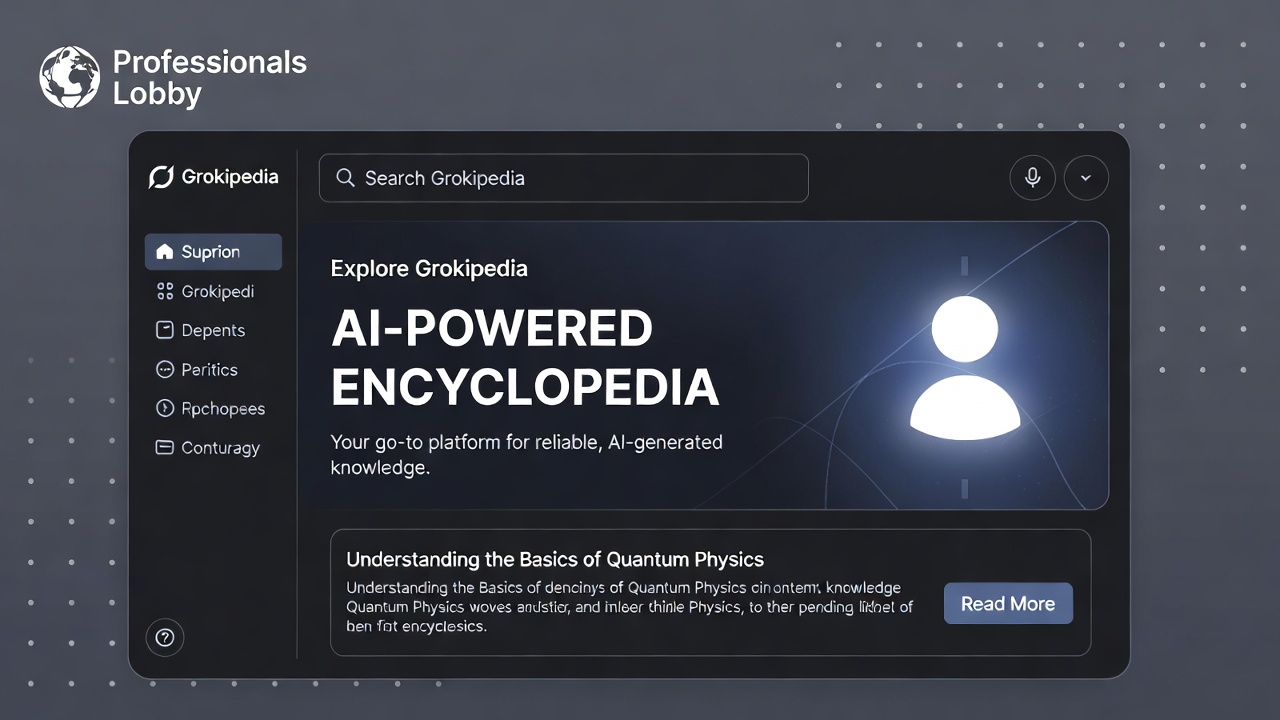
The AI-Powered Encyclopedia
Launched: October 27, 2025Grokipedia is an open-source, AI-generated online encyclopedia operated by xAI, the artificial intelligence company founded by Elon Musk in 2023. Accessible at grokipedia.com, it describes itself as a "comprehensive collection of all knowledge" and represents xAI's vision for AI-curated information systems.
Key Characteristics:
- Minimalist Design: Simple search interface with text-heavy, expository content
- AI-Generated Content: All articles created and maintained by Grok AI
- Real-Time Integration: Leverages Grok's real-time knowledge capabilities
- Mission Alignment: Part of xAI's broader goal of "understanding the universe"
"Grokipedia represents a massive improvement over Wikipedia and a necessary step toward understanding the universe."
How Grokipedia Differs from Wikipedia
While both platforms aim to compile human knowledge, their approaches represent fundamentally different philosophies of information curation and management.
| Aspect | Wikipedia | Grokipedia |
|---|---|---|
| Content Creation | Human editors and volunteers following community guidelines | AI-generated by Grok, with human suggestions reviewed by AI |
| Editing Process | Open editing with transparent history and community consensus | AI-mediated editing; users suggest changes that Grok approves/denies |
| Update Speed | Depends on volunteer availability and review processes | Real-time updates leveraging Grok's continuous learning |
| Bias Management | Community policies, NPOV (Neutral Point of View) guidelines | AI algorithms with training data influences; aims to reduce "human gatekeeping" |
| Growth Model | Organic, community-driven expansion | Rapid, AI-driven scaling (800K to 5.6M articles in months) |
| License | Creative Commons Attribution-ShareAlike | X Community License (most content), CC BY-SA 4.0 (Wikipedia-derived) |
Philosophical Differences
Wikipedia's Approach
- Human-Centric: Trusts collective human intelligence and community processes
- Transparency Focus: Edit histories, talk pages, and policy discussions visible
- Incremental Improvement: Content evolves through gradual community refinement
- Institutional Memory: Preserves historical perspectives and editorial decisions
Grokipedia's Approach
- AI-Centric: Trusts artificial intelligence to curate and synthesize knowledge
- Efficiency Focus: Prioritizes speed, scalability, and real-time relevance
- Unified Voice: Consistent tone and style across all content (Grok's "voice")
- Bias Reduction Goal: Aims to minimize human editorial gatekeeping and biases
How Grokipedia is Created and Functions on AI
Grokipedia's entire existence is predicated on the capabilities of xAI's Grok model, which handles content generation, maintenance, and quality control through sophisticated AI processes.
Content Seeding & Initial Generation
The platform launched with over 800,000 articles in version 0.1, primarily generated by adapting high-traffic Wikipedia pages. Grok rewrote, synthesized, and enhanced these articles, applying its unique "voice" and addressing perceived issues in the original content.
Technical Process:
- Analysis of Wikipedia's article structure and content patterns
- Rewriting with improved clarity and coherence
- Integration of real-time data where available
- Application of consistent stylistic and formatting standards
Continuous Learning & Updates
Grokipedia leverages Grok's real-time knowledge capabilities to maintain current information. As events unfold and new information becomes available, the AI model can update relevant articles dynamically.
Update Mechanisms:
- Real-time data integration from verified sources
- Automated fact-checking against multiple information streams
- Pattern recognition for identifying outdated information
- Proactive content improvement based on usage patterns
Quality Control & Consistency
Grok maintains editorial consistency across millions of articles, applying uniform standards for tone, structure, and depth. The AI handles internal linking, cross-referencing, and conceptual relationships between articles.
Consistency Features:
- Uniform writing style and depth across all content
- Automated internal linking based on semantic relationships
- Consistent formatting and structural standards
- Scalable quality maintenance as article count grows
Technical Architecture
Knowledge Base Layer
Grokipedia's foundation built on Grok's training data, real-time information integration, and Wikipedia-derived content (initial seeding)
Grok AI Processing Layer
Content generation, rewriting, synthesis, fact-checking, and consistency maintenance powered by Grok's advanced language model capabilities
Update & Feedback Layer
Real-time information integration, user suggestion processing, and continuous improvement cycles managed by AI algorithms
Presentation Layer
Minimalist interface delivering AI-generated content with search functionality and suggestion tools for users
Who Can Contribute to Grokipedia?
Grokipedia employs a fundamentally different contribution model than traditional wikis, emphasizing AI mediation over direct human editing.
Traditional Wiki Model
Wikipedia-style- Direct Editing: Users can directly edit articles
- Community Review: Changes reviewed by human editors
- Transparent History: Complete edit history visible
- Policy Enforcement: Human moderators enforce guidelines
- Revert Capability: Users can revert changes
Grokipedia AI-Mediated Model
Grok-powered- Suggestion-Based: Users suggest corrections via forms
- AI Review: Grok evaluates and implements suggestions
- Limited Transparency: Edit process managed by AI
- AI Enforcement: Grok maintains consistency and quality
- No Direct Reverts: Users cannot directly edit or revert
Contribution Process Flow
1. Suggestion Creation
Registered users identify issues or improvements and submit suggestions through on-page forms
2. AI Evaluation
Grok analyzes suggestions against factual accuracy, relevance, and consistency with existing content
3. Implementation Decision
Grok decides whether to implement, modify, or reject suggestions based on its analysis
4. Content Update
Approved changes are integrated into articles, maintaining stylistic and factual consistency
Implications of the AI-Mediated Model
Advantages
- Quality Consistency: Unified voice and standards across all content
- Reduced Vandalism: AI filtering prevents malicious edits
- Scalable Moderation: No need for growing human moderator teams
- Expertise Integration: Grok can incorporate specialized knowledge consistently
Challenges
- AI Hallucinations: Risk of fabricated or inaccurate information
- Black Box Decisions: Limited transparency in editorial choices
- Training Bias: Potential amplification of biases in training data
- Community Engagement: Reduced sense of ownership and participation
Relevance of Grokipedia in the Current AI Era
Grokipedia emerges at a critical juncture in AI development, representing both the possibilities and challenges of AI-curated knowledge systems in an increasingly complex information landscape.
Real-Time Knowledge Integration
In fast-moving fields like AI development, space exploration, and biotechnology, Grokipedia's real-time update capability addresses the latency inherent in human-edited systems.
Unprecedented Scalability
The rapid growth from 800,000 to 5.6 million articles demonstrates AI's capacity to scale knowledge curation beyond human volunteer limitations.
Alternative to Institutional Knowledge
By reducing human editorial gatekeeping, Grokipedia aims to create knowledge systems less influenced by institutional biases and consensus politics.
Living AI Experiment
Grokipedia serves as a large-scale testbed for AI knowledge curation, providing valuable data for improving AI reasoning, fact-checking, and synthesis capabilities.
Implications for AI Professionals and Businesses
For AI Developers & Researchers
Grokipedia represents a pioneering large-scale implementation of AI knowledge curation, offering insights into scalability, consistency maintenance, and real-time updating challenges at unprecedented scale.
For Businesses & Organizations
The Grokipedia model suggests potential future applications in enterprise knowledge management, internal wikis, and dynamic documentation systems powered by AI rather than human maintenance.
For Educational Institutions
AI-curated knowledge systems raise important questions about information literacy, source evaluation, and the role of human expertise in an increasingly AI-mediated information ecosystem.
For Information Integrity Professionals
Grokipedia's challenges with potential hallucinations and training biases highlight the ongoing need for robust verification systems, transparency measures, and ethical frameworks in AI knowledge curation.
Future Implications and Evolution
Grokipedia's Development Roadmap
Version 0.1 Launch
Initial release with 800,000+ articles, basic AI generation from Wikipedia content, and suggestion system
Version 0.2 Enhancement
Improved suggestion review system, enhanced AI editing capabilities, and user interface refinements
Rapid Expansion
Growth to 5.6 million articles, expanded topic coverage, and improved real-time update capabilities
Encyclopedia Galactica Vision
Potential rebranding to "Encyclopedia Galactica" with expanded scope supporting xAI's long-term space exploration goals
Broader Implications for Knowledge Systems
Optimistic Scenario
Grokipedia evolves into a highly accurate, real-time knowledge resource that complements human-curated systems, driving innovations in AI reasoning and knowledge synthesis that benefit all information systems.
- Hybrid AI-human knowledge systems become standard
- Real-time knowledge updates transform education and research
- AI mediation reduces polarization in controversial topics
Challenging Scenario
Persistent issues with AI hallucinations, training biases, and lack of transparency limit Grokipedia's reliability, reinforcing the value of human oversight and community curation in knowledge systems.
- Information fragmentation across AI vs. human systems
- Difficulty detecting and correcting systematic AI biases
- Reduced public trust in AI-curated information
Transformative Scenario
Grokipedia inspires entirely new paradigms of knowledge curation, leading to specialized AI knowledge systems for different domains (science, law, medicine) with customized verification and presentation approaches.
- Domain-specific AI knowledge curators
- Personalized knowledge presentation based on user needs
- Integration of knowledge with AI tutoring and explanation systems
For AI Professionals and Knowledge Managers
Grokipedia represents more than just another online encyclopedia—it's a living experiment in AI knowledge curation that professionals in AI, data science, and knowledge management should actively observe and analyze.
1. Explore and Analyze
Visit grokipedia.com to experience the platform firsthand and analyze its approach to various topics relevant to your field.
2. Evaluate and Compare
Compare Grokipedia content with Wikipedia and other sources on key topics to assess accuracy, bias, and presentation differences.
3. Consider Applications
Reflect on how similar AI curation approaches could be applied in your organization's knowledge management systems.
4. Engage in Dialogue
Participate in professional discussions about the implications of AI knowledge curation for your industry and field.
"Grokipedia embodies the intersection of AI and information—exciting for tech professionals and a reminder of the need for rigorous evaluation in this transformative era."